
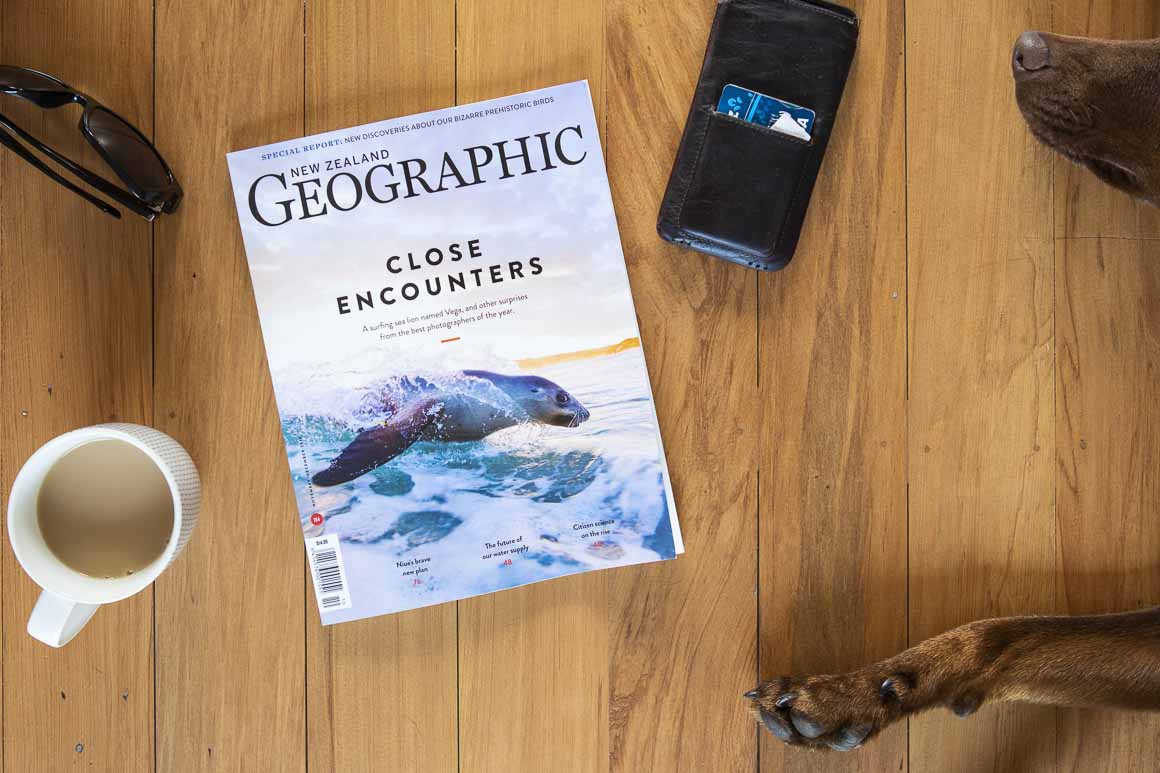
A dream came true for me last week. In fact several did. Ever since I started out as a photographer I've looked at National Geographic and New Zealand Geographic as the holy grail – the tomes that held the very cutting edge of editorial photography.
About 23 years ago I walked into the New Zealand Geographic offices in Auckland and showed the photographic master, Arno Gasteiger, a sheet of my transparencies. He spent 10 minutes with me, but it seemed like a lot longer. He perused each of the 20 frames in the slide sheet, picked one and told me, "this one is the right exposure". He also told me that if I wanted to be a wildlife photographer I should shoot things in my backyard and show them in a fresh way. We took in a lot of abandoned cats on the farm. "Shoot cats," he instructed me.
Since that day I have played the long game with wildlife photography, which often gets shelved for less time-consuming and better paying photography – the sort that will feed my kids. But Arno's words remain in my head and the many influences from the plethora of amazing photographers inspire and guide me, including the generous wisdom passed on by Kim Westerskov, my friend and mentor.
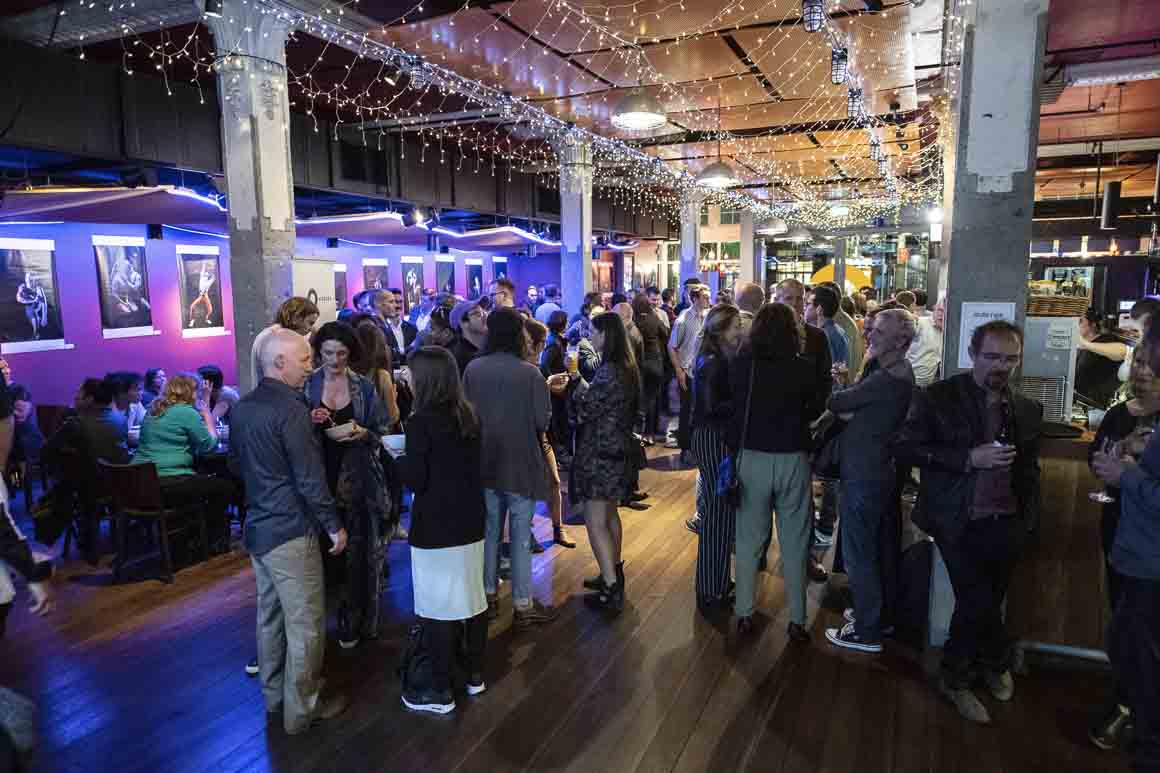
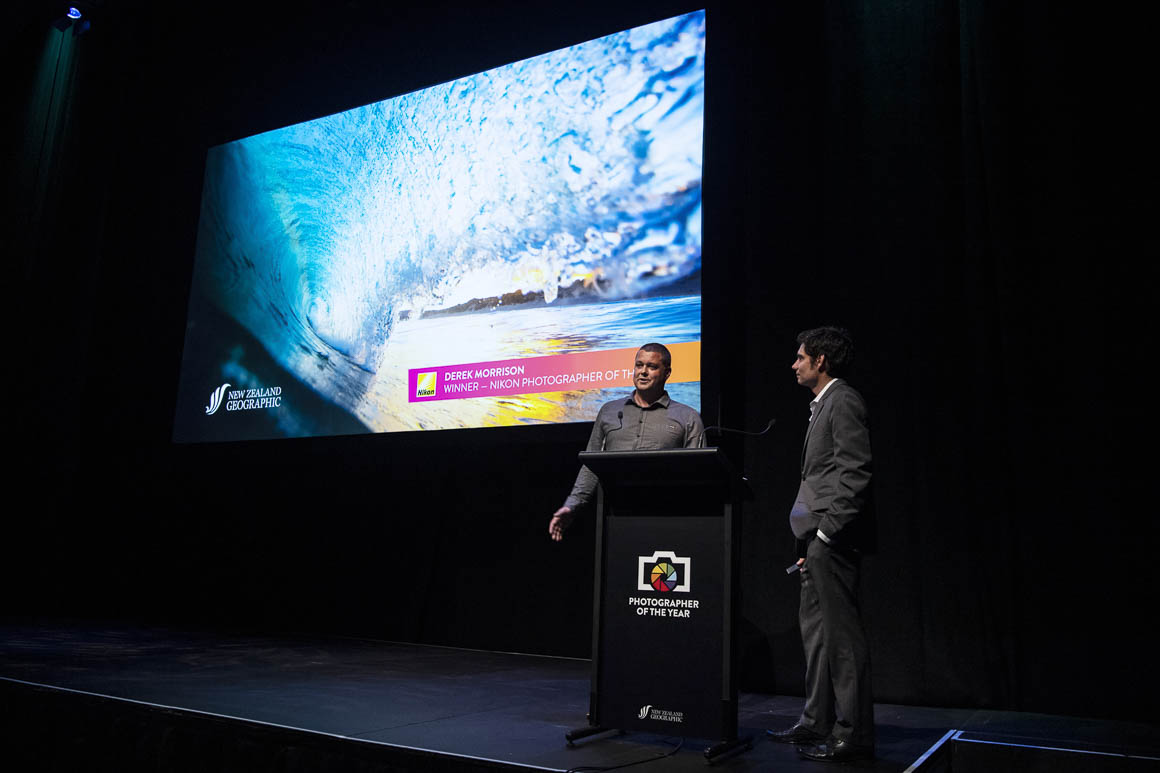
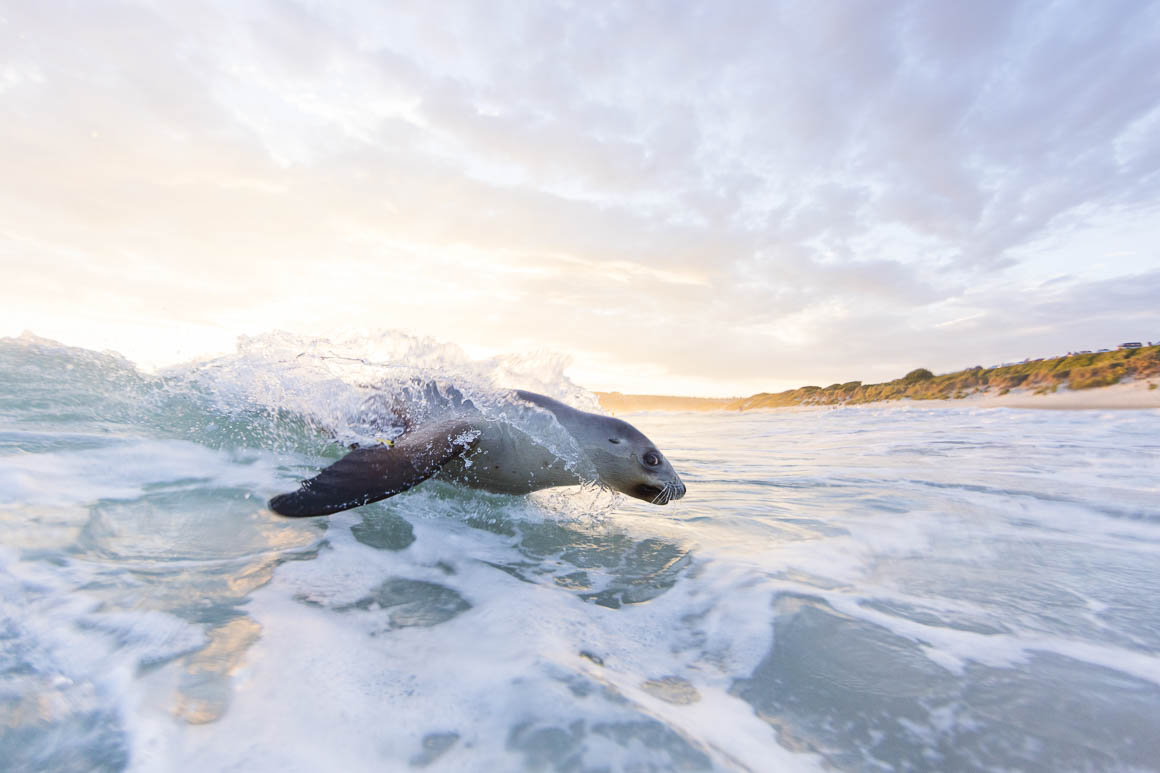
So on Thursday night, at a funky event held at the Q Theatre in Auckland that was brimming with the best photographers in the country, my dreams began to come true. Firstly, my image of Vega, the charismatic immature female sea lion I photographed surfing a wave at St Kilda Beach, won the Electric Kiwi Wildlife category of the New Zealand Geographic Photographer of the Year awards. I was stunned and honoured to receive the award – especially considering the quality entries in the running.
I'm telling you this not to gloat, but because you, my Box of Light readers, have been on this journey with me for more than seven years now and you're as much a part of this win as I am. In fact, my second part of this dream is mostly down to all of you. The announcement for the Panasonic People's Choice award again had my picture of Vega at the top (by a mere 40 votes). I was in shock – in awe of an audience of New Zealanders who fell in love with the endearingly charismatic Vega ... just like I had.
You couldn't top the feeling I had in that moment. But it was about to get even better and I didn't see this coming either. The Nikon Photographer of the Year was announced and I had my best judge's eye on at least two other photographers for the top gong. I could hardly believe seeing my name up there as the publisher of NZ Geographic, James Frankham, made the announcement. My head was completely abuzz.
In January this year my Mum passed away after a short battle with cancer. She had shared this dream with me. All those years ago when I first picked up a camera and began to pursue photography as a career she supported my ambition. Never once did she suggest I get a "real job" despite my persistently meagre income (and at times a lot of dreadful photos). She believed in me doing what I wanted to do. When the photo of Vega came out in Box of Light, she emailed me to say I should enter it into the NZ Geographic awards and that it was "a dead-set winner". She often said that about various photos I took, so I dismissed her remarks. But she had seen the look in Vega's eye and it turns out she was right. To see Vega on the cover of the latest issue of New Zealand Geographic (on sale at your local bookstore right now, or if you're in Australia you can buy it here) is the icing on a pretty amazing cake. That's the place that every photographer wants to see their work, the pinnacle. I am honoured to see Vega there. Go get yourself a copy, or subscribe to the online editions and immerse yourself in some of the best journalism on the planet.
I dedicate this accolade to Mum and to my Dad – both of whom believed in me even when sometimes I was running low on self-belief and thin on creative impulse. They gave me the work ethic, mindset and resilience to always strive to improve. Thanks Mum and thanks Dad, this is for you, because of you.
See you at the beach ... Derek
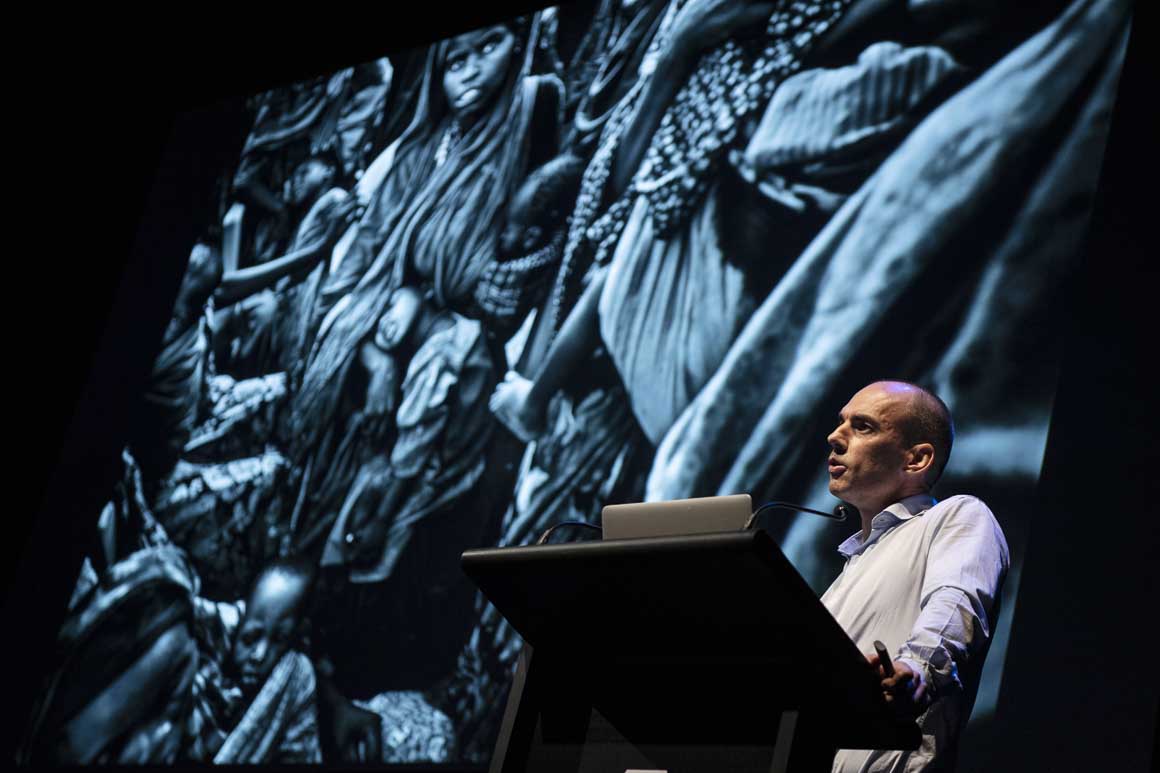
PS The New Zealand Geographic team don't do things by halves and enthralled the gathered photographers with a key note speaker called Robin Hammond. He's a Kiwi photographer living in the UK and using his incredible talent with a camera to change the world. He's a National Geographic regular, recently addressed the UN, but he is more at home sharing the stories of those without the freedom or ability to do so. His project, Witness Change, exists to end human rights violations for marginalized communities through visual storytelling. Dig deeper, it's incredible work.
Proudly supported by: