
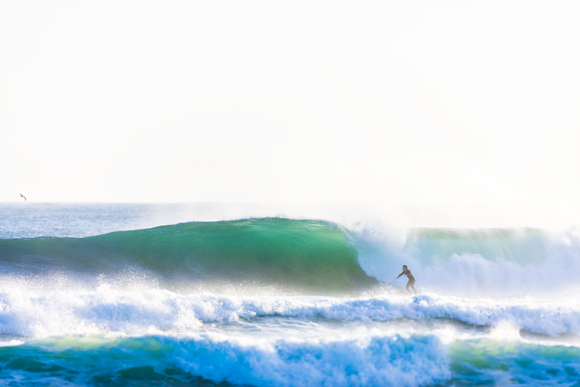
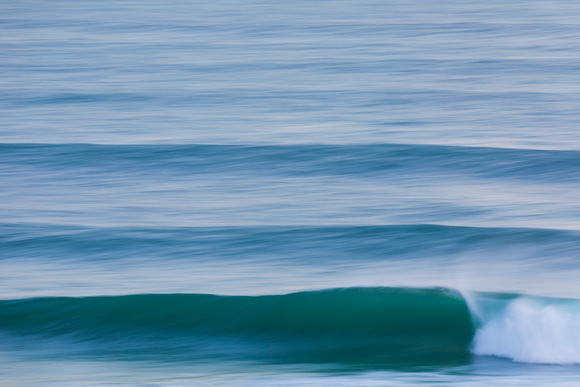
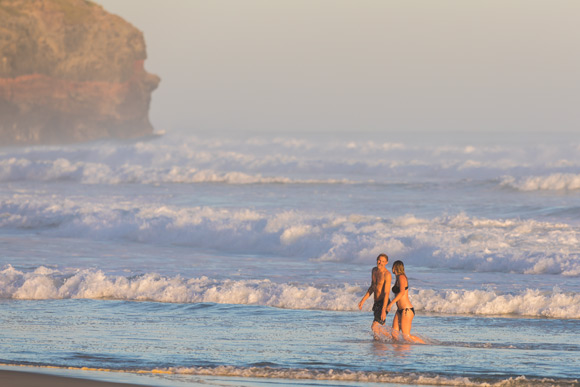
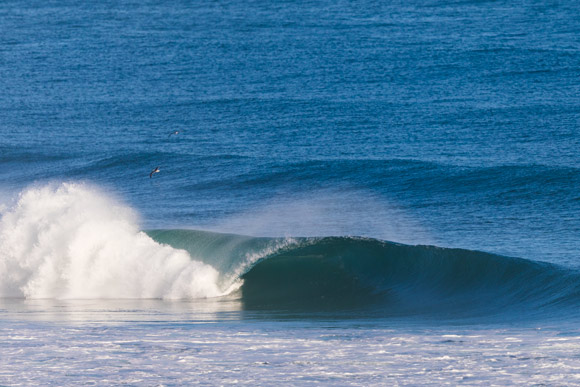
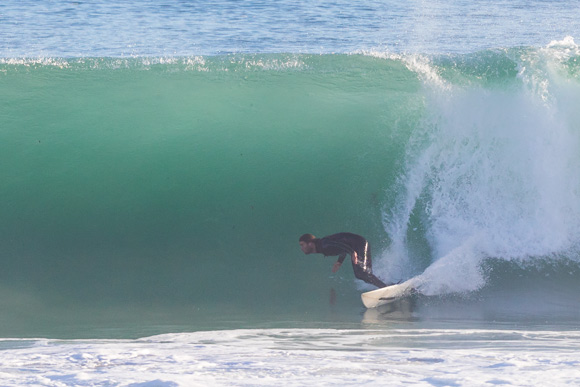
Since 2011 I have been capturing that beauty of Dunedin’s beaches every week. So you can imagine how gutted I was to learn that the city poured 10,680 cubic metres of stormwater-diluted sewage into the sea at Lawyers Head a few weeks ago.
At 2:20pm on February 1, 2018, Mayor Dave Cull declared a state of emergency in Dunedin. The city was reportedly suffering “significant flooding” events and infrastructure was bulging at the seams. Old clay wastewater pipes, currently part of a citywide upgrade, are only vaguely water tight, cracked, broken, slumped and not much more effective than drinking a smoothie through a straw made of fish net stockings.
MetService recorded 109.6mm of rain had fallen in the city on February 1 and that, combined with the backflow from an inundated Kaikorai Valley, meant South Dunedin’s stormwater was suddenly laced with untreated sewage.
The Tahuna Wastewater Treatment Plant, which was upgraded in January 2013 to allow secondary and tertiary treatment processes, delivers its payload 1.1km out into the South Pacific Ocean off St Kilda Beach. Mostly it works for what it was built for. But add in a flood event and the system fails.
“In a perfect world a wastewater treatment plant should not receive any more volume on a rainy day than it would on a dry day,” offers acting plant operations manager Derek Crawford. “But this is not a perfect world. We often get 2-3 times as much as we should and the plant gets overwhelmed with that volume.”
He said the plant received 6-7 times the inflow during the February 1 event.
“Tahuna is designed to treat up to 4 m3/s of wastewater flows,” explains Crawford.
“On 1 February, approximately 10,608m3 of screened and highly diluted effluent was discharged to Lawyers Head. This represents about 14.3% of the wastewater that went through the plant during this period.”
“You have to remember that it is highly diluted sewage at that point,” offers Crawford. “Contamination from the stormwater probably has a greater effect on the water quality.”
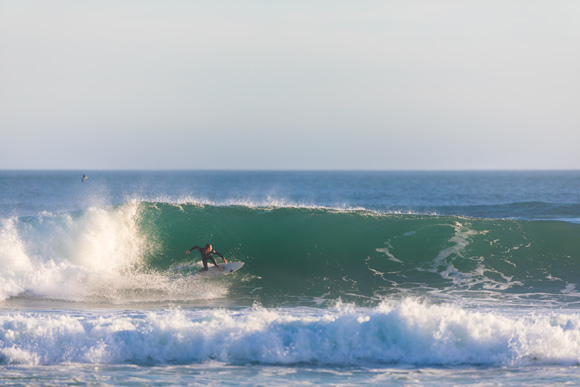
Despite the conscious decision to open the outfall at Lawyer’s Head and contaminate the beaches with sewage, the public wouldn’t have known. There were no signs warning of the risk to people’s health until the following week, nothing in the media apart from a series of reports on one radio station. The ball was dropped. Surfers and beach users were oblivious to the very real risk to their health.
“Water quality is becoming an important issue for New Zealanders and we just can’t put raw sewage in the ocean,” agrees Dunedin City Council 3 Waters commercial and regulatory acting manager Karen Sannazzaro.
She said that was why the renewal work was being done.
DCC manages 1232km of pipes in the city network and estimates 40% of them were laid before 1950 with some dating back to the 19th century. The Kaikorai Valley overflows are the first cabs off the rank with work to renew the network.
The DCC website states that the Kaikorai Valley Road overflow operates “on average 19 times per year”.
Sannazzaro said the “pinch point to speeding up the renewal process was contractor availability”.
DCC estimates the cost of preventing overflows to range from $35-$130 million. The city spent $3 million on wastewater network renewals in 2016 and was increasing that to $6 million by 2025 with a forecast spend to 2025 of $48 million.
In 2010 the DCC released the 3 Waters Strategic Direction Statement, which stated that:
“We will resolve all known cross connections between the foul and stormwater networks by 2015, and have an ongoing programme to disconnect the systems as new issues are identified.”
Clearly it was an ambitious timeline.
The DCC holds a special consent that permits the dumping of sewage into the ocean at Lawyers Head in an emergency. In this most recent case, flooding homes in South Dunedin as the floodwaters met with the high tide, was not a good alternative. But the potential of this set of circumstances arising is not new – the risk had been identified several decades ago. Yet, here we are in 2018, a city of the future, dumping raw sewage like the thoughtless pioneers of a bygone era.
Surely, we’re better than that? It may not have the glitz of a new stadium and it may not have the glamour of a bridge just for cyclists, but the sewage and stormwater network needs to be raised up the priority queue at DCC. You can help by submitting to the DCC 10 Year Plan. You can do that right here.
See you at the beach … mind the faeces … Derek
PS By the time you read this, the E. coli levels should have returned to safe levels, but if it rains and rains and rains again, think twice about that surf. Here’s your guide to E. coli which takes between 2-10 days after exposure before symptoms appear.





Proudly supported by: