
A long-time friend of mine recently returned from the front lines of the Kaikoura catastrophe and told me it was equal parts, sad, inspiring, hectic and adrenaline pumping. Simon Makker is the Earthquake Recovery Communications Manager for Red Cross, based in Christchurch.
"It made sense for me to be in the thick of it," he shares. "I was there to cover and document the immediate response from Red Cross and provide a media contact for our operations there. I spent four days shooting and using social media to provide updates on the situation on the ground, updating the rest of the organisation of the goings-on, and undertaking a massive amount of national and international media interviews."
When the chartered plane that carried Simon and four Red Cross disaster response volunteers landed in Kaikoura, they immediately realised how big the quake had been.
"We hitch-hiked to town with all our gear and the torn up roads were completely dead ... until we crested the ridge between the South Beach and the township, and it was just chaotic," he recalls. "There were people everywhere, cars and campers parked all over the roads and park, and people wandering around looking lost and bewildered.
We were based at the Takahanga Marae, which was transformed into a welfare centre, but all the beds were full and we ended up sleeping on the floor of a concrete cupboard the first night."
Simon spent Tuesday and Wednesday helping to coordinate the evacuation of the 1000 tourists to alleviate pressure on resources for the locals.
"Wednesday also saw us work with Urban SAR, police, the army and building assessors to start visiting residents and seeing how they were going, and undertaking rapid building assessments," he added.
While the media focus had been on government responses and the tourists, Simon said the locals were doing it tough.
"We dropped some supplies off to an elderly couple at the foot of Mt Fyffe and it was a big reality check to see the mammoth task the locals are facing," he explains. "Their house looked like a giant had picked it up, shaken the crap out of it, then placed it back on its foundations – contents were just strewn everywhere."
Simon said the Red Cross response teams had been working from a drop-in centre at the Kaikoura Suburban School to provide supplies and information to rural residents.
"The locals did feel like they'd been overlooked the first few days, but many of the rural residents are reasonably self-sufficient and our first priority was to remove the tourists from the equation, to free up valuable resources for the locals. Our teams working with the rapid building assessment tasks were quite shocked with the level of stress and trauma they encountered during their home visits. They're all trained in psychological first aid, but even so, there's not a lot that can prepare you for talking to up to 100 distraught residents in a day."
I asked Simon how long a recovery might take for a town like Kaikoura.
"If we've learnt anything from Christchurch, it's that the recovery takes 5-10 years," he says shaking his head.
"This is going to be a different recovery to Christchurch because in Christchurch everyone is easily accessible; Kaikoura and Blenheim have such a large rural population that it's going to be a more complicated recovery programme as far as Red Cross is concerned. For the township, it's going to take a long time to turn things around and it's completely dependent on both the SH1 access being restored (likely to take months) and tourists returning. The government's 12-month assistance package will certainly help smaller businesses in the short-term, but I personally think it needs to be doubled to two years and expanded to include larger businesses."
Simon said it was way too soon to guess what the new normal might look like for Kaikoura.
"In the long term I hope the amazing scenery and marine life will again attract tourists and life will continue. In the short term, the residents and businesses are going to have a huge task ahead of them. Kaikoura District Council is the smallest council in New Zealand with just 22 employees, so to lump what's likely to be a multi-billion dollar recovery on their shoulders is going to be massive."
He said that despite the widespread calamity he was inspired by seeing people work together.
"Just seeing humanity pull together to help everyone through was amazing, and the vast majority of people had a big smile on their face while doing so," he adds. "Kaikoura is currently its own little micro-world being completely cut off, but everyone is in the same boat and is working together for a common cause."
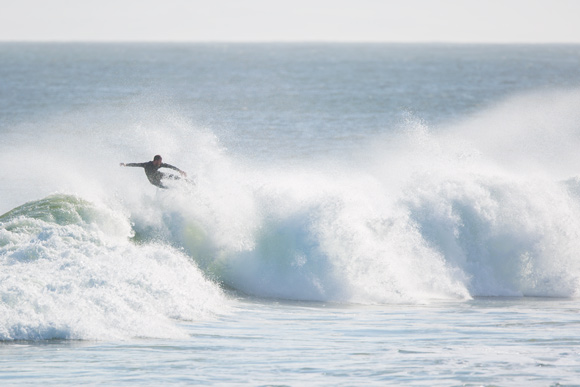
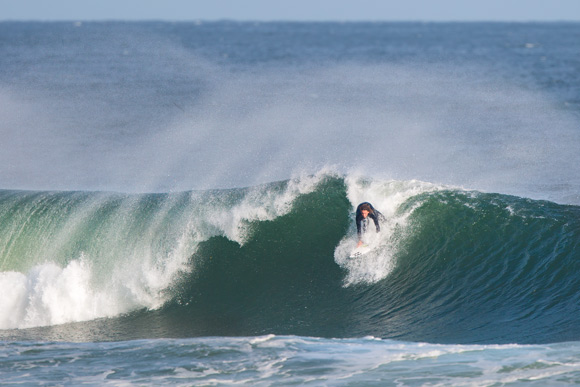
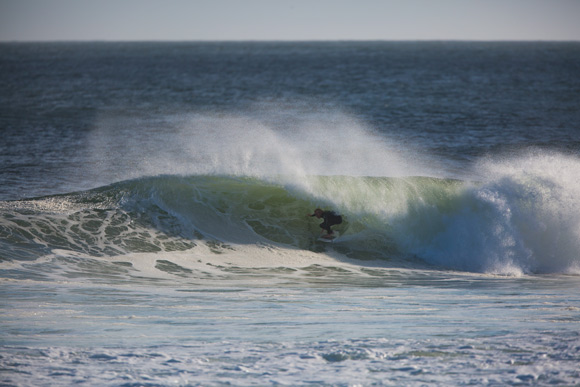
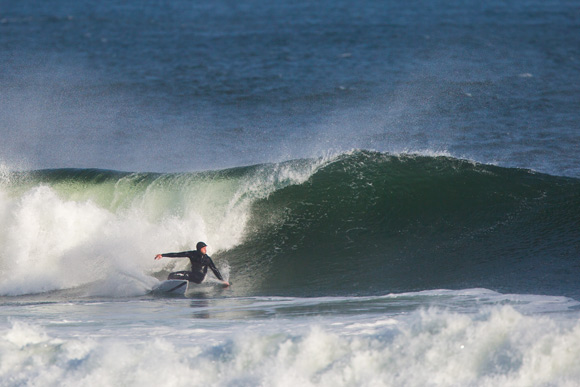
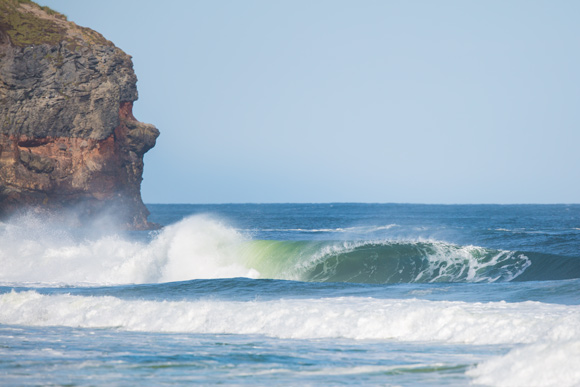
Simon said it was not yet known what affect of the seabed rise might have had on Kaikoura's world-class surf breaks.
"I met one surfer, Dan, from Perth. He was working on the crayfishing boats, but work there has ceased for the forseeable future – the marina is stuffed and there's no way to get the crays out of town. He was helping with the coordination to get the tourists out of Kaikoura as he felt he couldn't just sit at home and do nothing when there was so much to do outside his doors. He was hoping to get out later that day (Wednesday) for his first surf at Meatworks, but didn't have any idea what to expect. The seabed has raised 60cm-2m and that's going to have a huge impact on all of the surf breaks in the area, but what sort of impact is yet to really be seen until a big swell hits."
Finally I ask Simon about the equal parts, sad, inspiring, hectic and adrenaline pumping of his time there.
He laughs, "Okay, so, sad: to see so much lost in such a beautiful part of the world. Meeting the daughter of the elderly man who passed away was tough and really brought home the reality of the situation."
"Inspiring: to see so many people just roll their sleeves up to get things done. The local iwi were incredible and fed tens of thousands of people in the first week through the marae welfare centre, and many tourists stepped up and volunteered wherever they could, selflessly putting everyone else before themselves to ensure everyone left safely."
"Adrenalin-pumping: aftershocks that throw you sideways in the middle of the night, just being on the ground and witnessing events unfold, then relaying what you're seeing to the rest of the world."
"Hectic: it was just a surreal experience. In one day I did a live cross with One News, met John Key, coordinated media crews from The Press, Story and TVNZ to help cover the aftermath, helped tourists with information, worked closely with the top dogs of the army, undertook house visits to quake-affected residents and witnessed the efficient evacuation of 700 tourists with the use of army choppers!"
Yep, that's worth supporting: you can help the Kaikoura residents by contributing to the Red Cross November 2016 Earthquake Appeal right here.
See you at the beach ... Derek
PS We have extended our offer of donating $8 to the Red Cross for every Merino Country book sold through Box of Light up until December 15, 2016 (or we sell out). Get yours here.
Proudly supported by: