
100 years ago this past weekend a large, chiselled man from the islands of Hawaii came to Dunedin’s St Clair Beach and attempted to bodysurf the waves that reminded him of home. He struggled to get many, so returned to the beach and ripped the back off an old wooden chair. He used it as a rudimentary paipo – body plane – and proceeded to ride waves across the beach.
His name was Duke Paoa Kahanamoku and his act would sew the first seeds of surf culture in Dunedin, throughout New Zealand and the world.
Duke had turned heads from when he first stepped on New Zealand soil in 1915. He quickly set a whole raft of swimming records and his popularity soared.
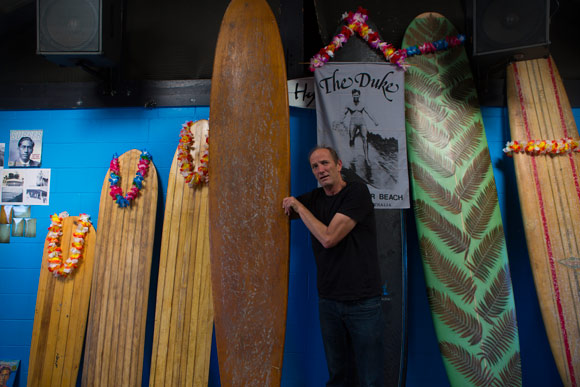
Shay Dewey, a television cameraman and editor based in St Clair, organised The Duke Longboard Festival held on Sunday to celebrate Duke’s “gift” 100 years ago.
“He influenced a lot of people who became surf lifesavers and adopted swimming careers,” offers Shay. “One local guy who now has a house overlooking the beach of St Clair is called Duke Gillies – he was even named after him.”
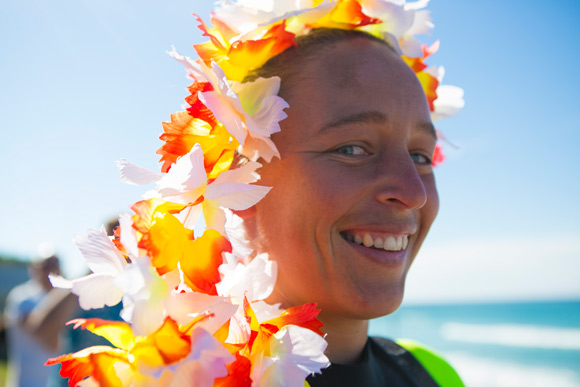
“The event is a celebration of the gift of surfing that he spread to the rest of the world,” continues Shay. “He is basically the godfather of surfing and brought with him the spirit of Aloha.”
Aloha is the welcoming spirit – it’s about embracing that special buzz that people get from surfing.
“Duke actually visited all the small towns as well as he travelled around,” adds Shay. “In the South Island he also did a surfing demonstration at New Brighton and they held a celebration there as well this past weekend.”
Despite Duke’s visit, surfing wouldn’t gain full momentum here until surfboard design had also reached our shores.
“It wasn’t until the 1950s that board designs started to arrive from overseas that boards began to be made here,” explains Shay. “Magazines started to share board designs and a lot of surf lifesavers got involved in making them. There was a lot of crossover at that stage. Then in the late 1950s the fibreglass boards started to come in and there was a definite shift toward boards designed just for surf riding. Surfing culture started to take off in its own direction. By the 1960s longboarding was taking off in Dunedin.”
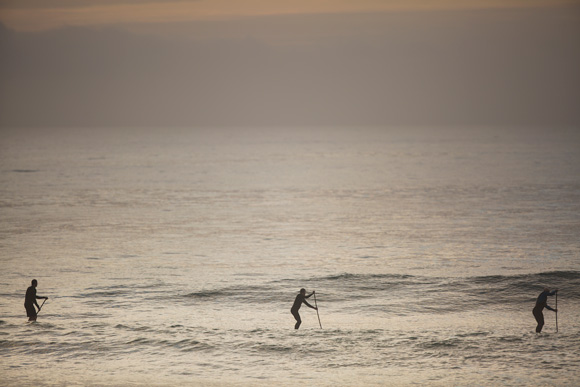
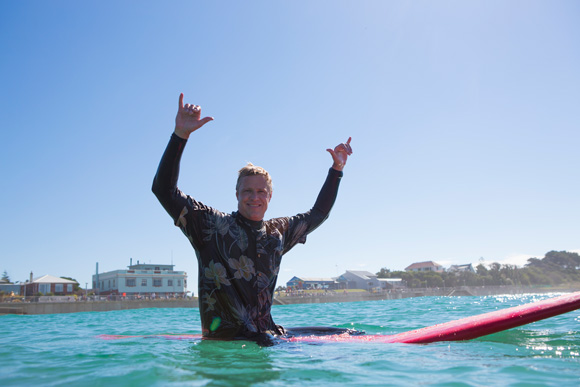
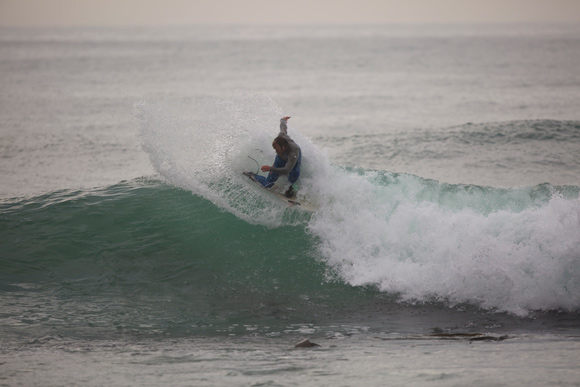
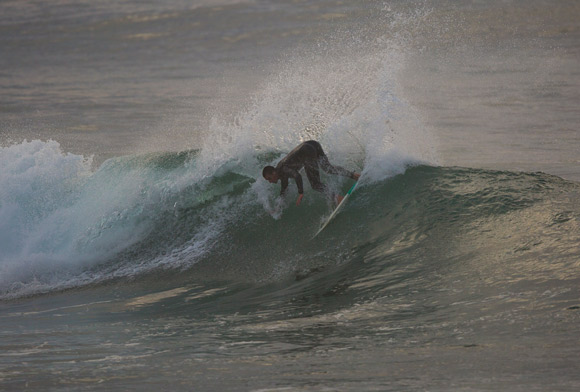
Part of the event on Sunday included a mass paddle out and a chance for gathered surfers to understand the concept of Aloha.
“Aloha is very similar to aroha,” shares Shay. “It’s that embracing spirit and he captured it in the creed that he lived by – a spiritual friendship and welcoming saying. It’s like kia ora, but closer to aroha in meaning. It’s about accepting people no matter what race, creed, colour, country or background they come from … and embracing them.”
The gathered crowd included surfers from the ’60s right through to young grommets – riding a range of surf craft. They paddled out and formed a circle and then Rod Rust, a local surf identity, paddled into the centre and read out the Duke’s creed:
In Hawai’i we greet friends, loved ones and strangers with Aloha, which means with love. Aloha is the key word to the universal spirit of real hospitality, which makes Hawai’i renowned as the world’s center of understanding and fellowship.
Try meeting or leaving people with Aloha.
You’ll be surprised by their reaction.
I believe it and it is my creed.
Aloha to you.
Duke Paoa Kahanamoku
There was a lot of discussion during the festival at the binding power of the Duke’s story and whether Duke Kahanamoku’s visit should be marked with a public artwork of some sort.
“It would be great to be able to raise the money and will of those in charge of the public spaces to do this,” Shay considers. “I think the community and local businesses would get right behind that.”
See you at the beach … and, Aloha
PS Keen to explore the waters around the Mapoutahi PÄ site with an experienced snorkel guide? You can get amongst it this weekend. More info here.



Proudly supported by: